Light
A practical approach to layered lighting
11 AUGUST 2026 · 3 MIN READ
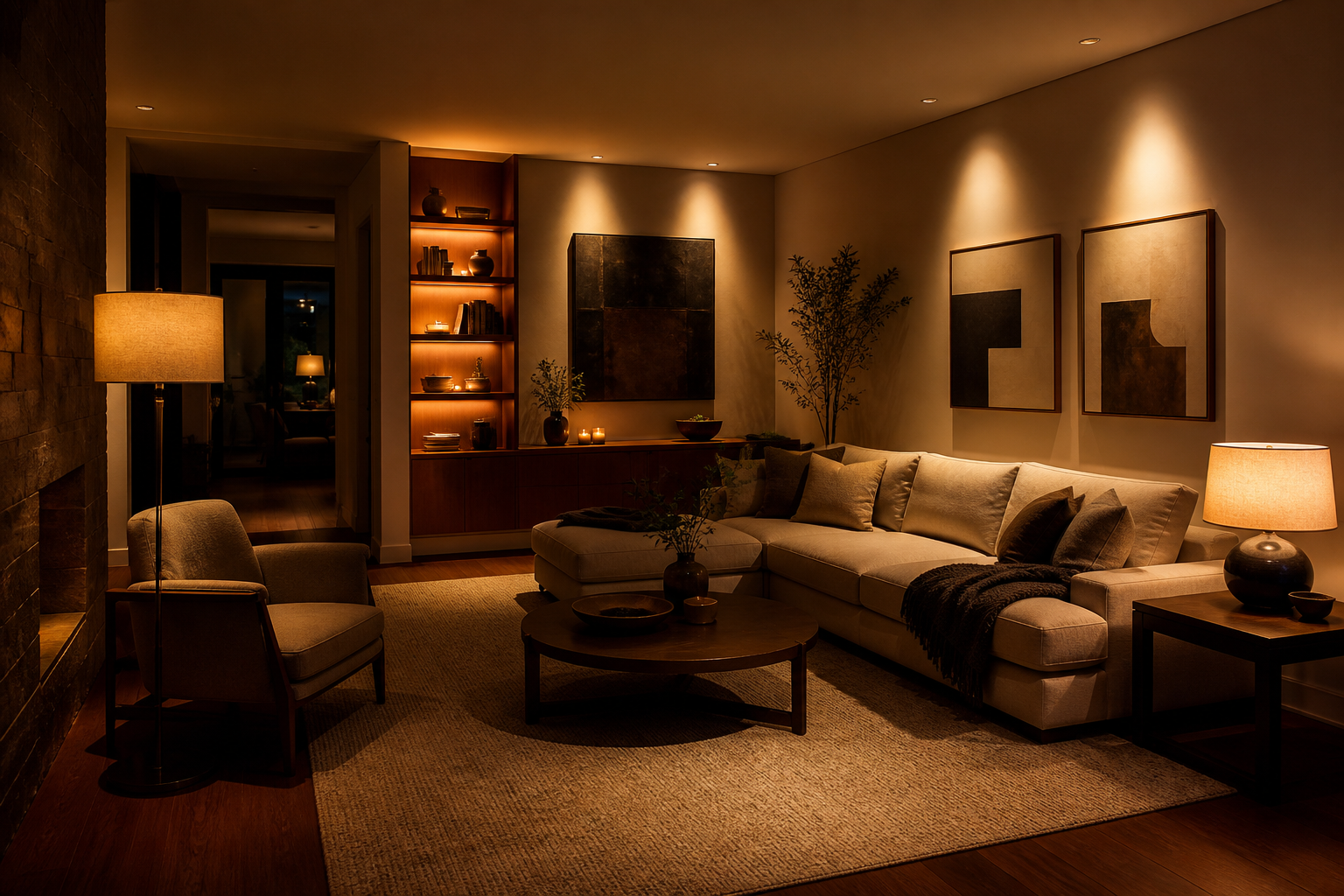
Good lighting is not one statement fixture. It is a measured mix of ambient, task, and accent light placed where the room needs it. The plan begins with activities, not products.
Map the room after daylight fades
Walk through an ordinary evening in sequence. Someone enters, puts down a bag, cooks, reads, talks at the table, and moves upstairs. Each moment asks for a different amount and direction of light. Writing down those moments reveals where the plan needs clarity and where it can remain subdued.
Ambient light makes circulation comfortable, but it should not be expected to do every job. A bright ceiling grid often solves visibility by flattening the entire room. The result is efficient and rarely restful.
Put task light close to the work
Reading, food preparation, and desk work need light where the hands and eyes are, not simply more brightness overhead. A shaded lamp beside a chair or a concealed source under a cabinet can provide useful illumination without raising the level everywhere else.
Check for glare as carefully as shadow. A visible bulb reflected in stone or glass can make a well-lit surface uncomfortable. The best task lighting feels obvious in use and nearly disappears from attention.
Use accent light to establish depth
Accent light gives the room a foreground and background. It might wash a textured wall, graze the edge of a bookcase, or illuminate one piece of art. One or two such moments are usually enough. If every surface is highlighted, none of them creates hierarchy.
The unlit areas between sources matter just as much. Shadow separates one pool of activity from another and gives the eye a place to rest.
Protect the evening
Warm, dimmable sources near eye level are generally more comfortable late in the day than a single bright source overhead. Put the fixtures that are used together on logical controls and make the low-light setting easy to reach. A scheme that requires five switches to feel calm will not be used as intended.
A successful lighting plan is noticed less as a collection of fittings than as a room that changes naturally with the day.
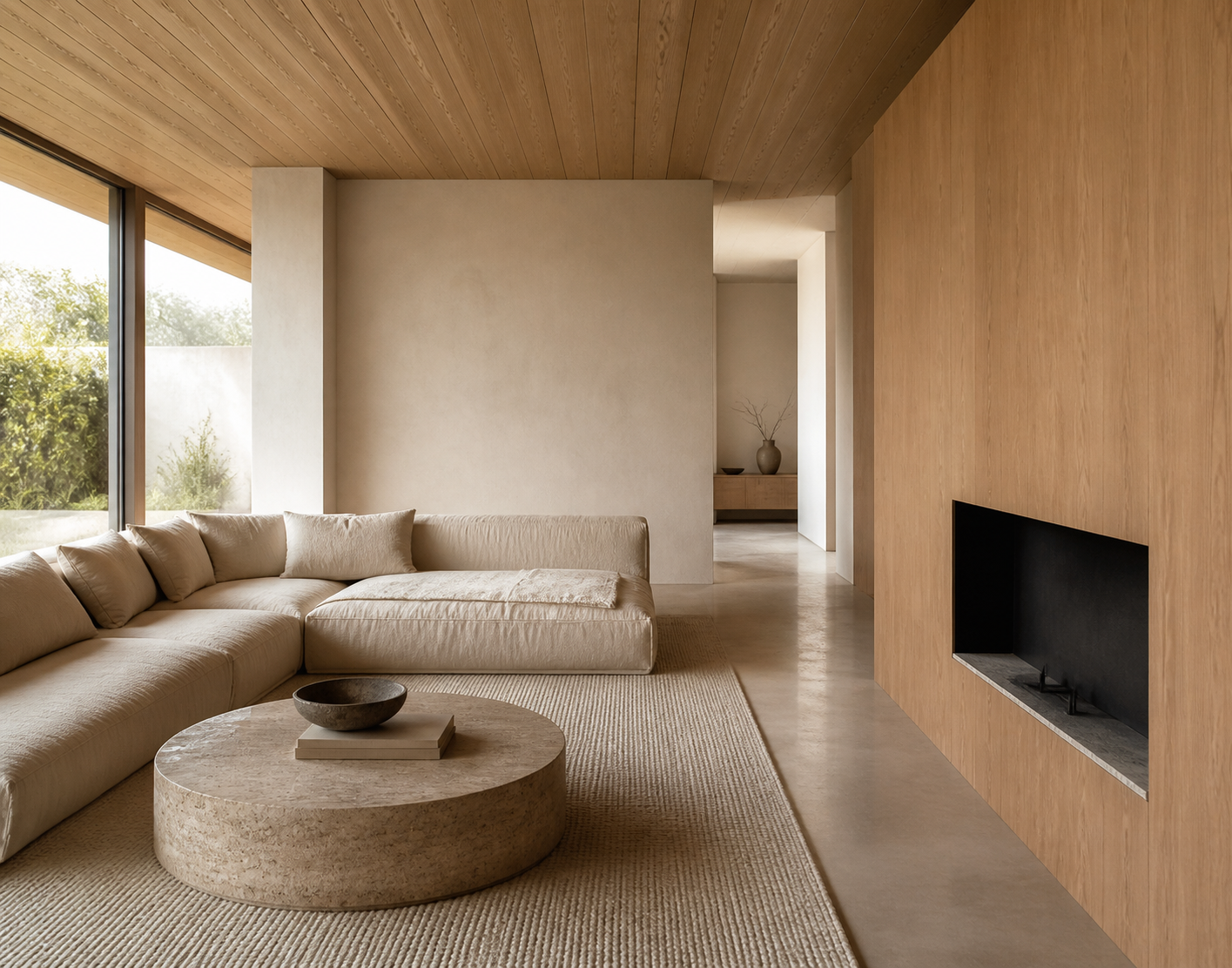
Why fewer materials can make a room feel richer
Limiting the palette does not limit expression. It gives proportion, texture, and light more room to do the work.
Read article →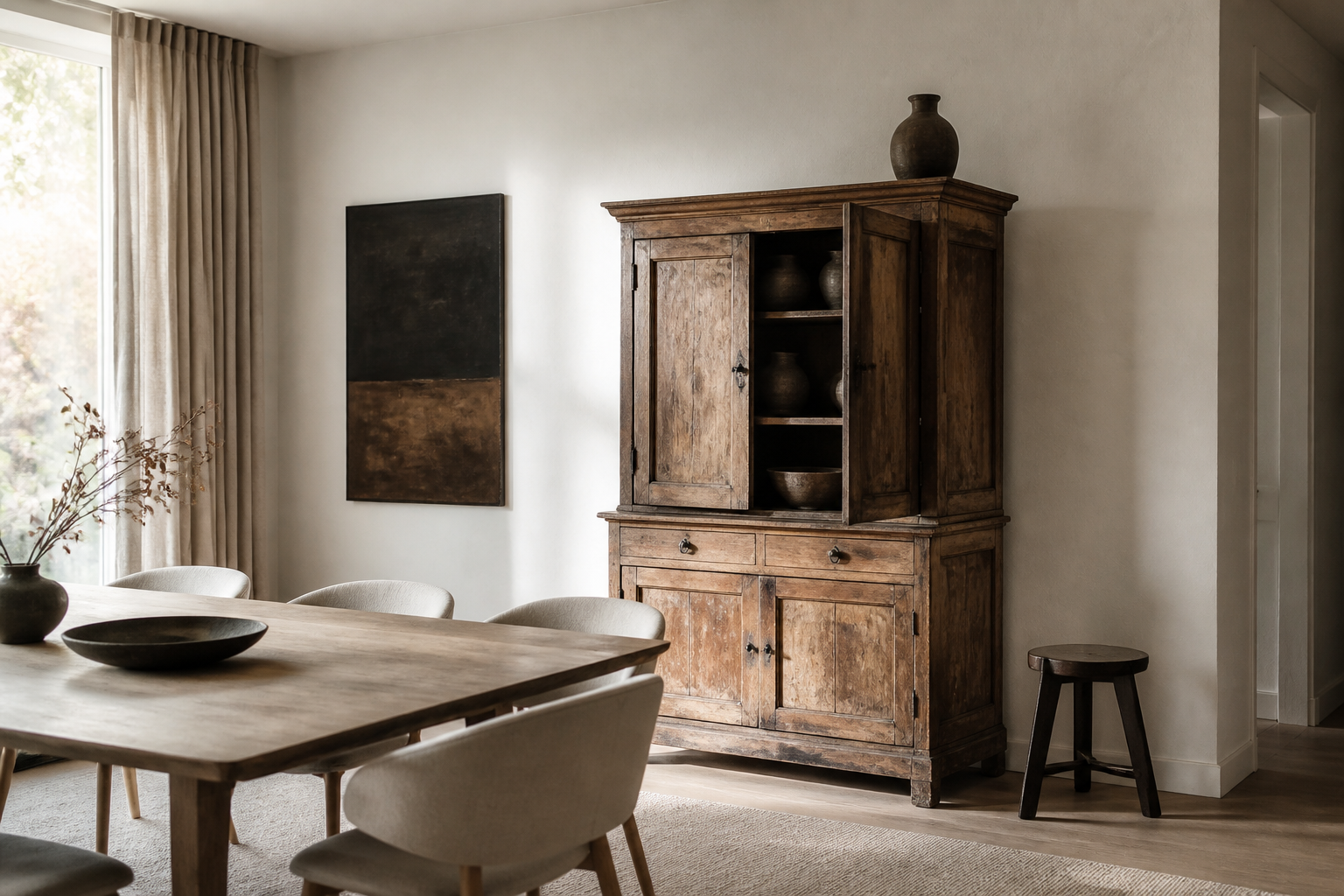
How one vintage piece can change the room
A single piece with age can break perfection, introduce memory, and give contemporary furniture something to respond to.
Read article →
What makes a neutral room feel warm
Warmth comes from variation: rough beside smooth, matte beside reflective, old beside new. Color is only part of the equation.
Read article →