Materials
Why fewer materials can make a room feel richer
24 AUGUST 2026 · 3 MIN READ
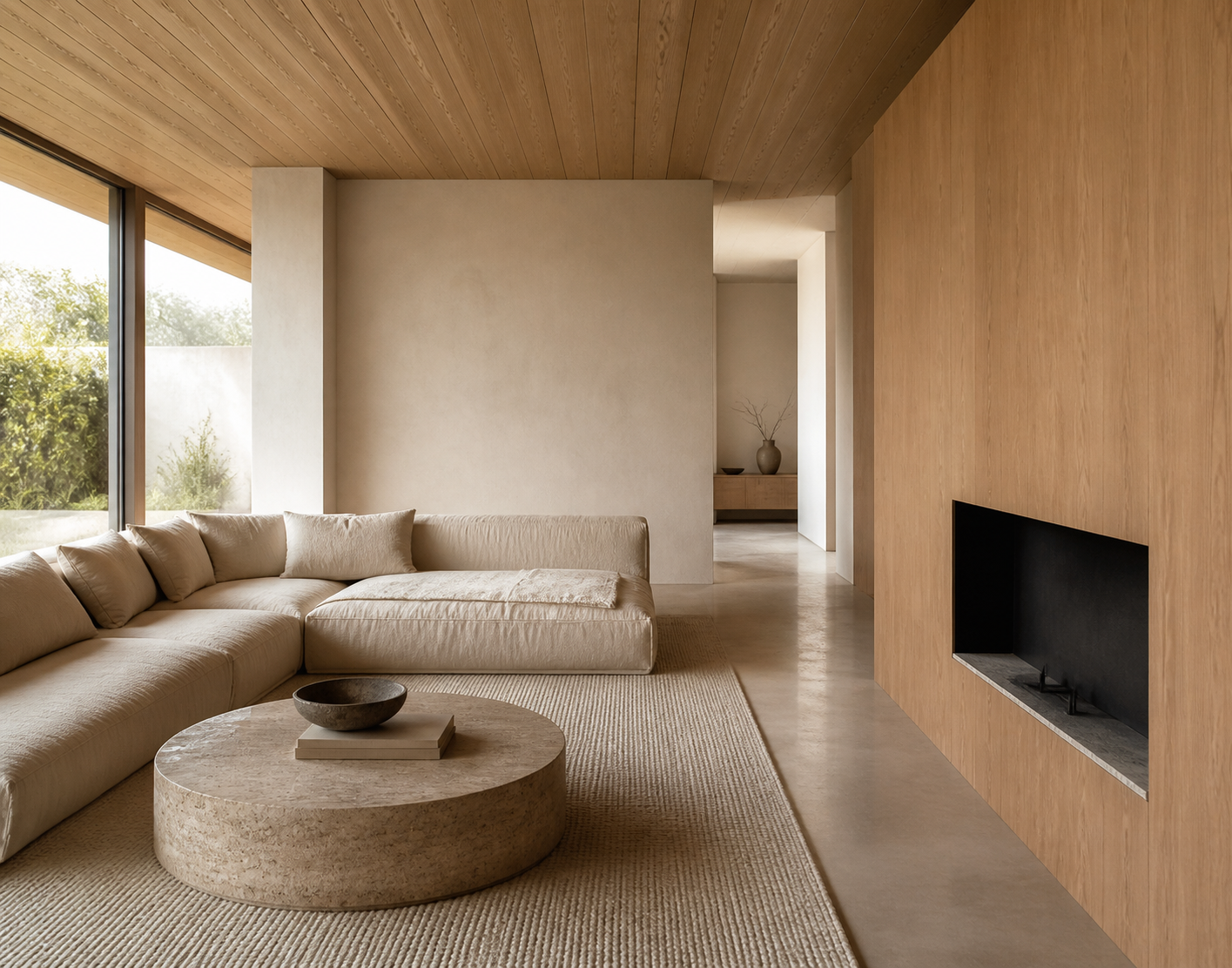
Limiting the palette does not limit expression. It gives proportion, texture, and light more room to do the work. The useful question is not how many finishes a room contains, but whether each one has a clear role.
Start with the largest surface
The floor, a wall of joinery, or a long plaster plane sets the room’s baseline before smaller choices enter the picture. Choose that surface for its behavior as much as its color: how it meets daylight, how it wears, and whether it can continue through more than one area without becoming monotonous.
Once the dominant material is established, the next decisions become easier. A stone worktop can relate to the floor without matching it. A timber shelf can repeat the joinery at a different scale. The room develops a family of surfaces rather than a catalog of unrelated samples.
Repeat before adding
Repetition is what makes a limited palette feel deliberate. The same oak might return as a cabinet front, a table edge, and a narrow picture ledge. The repeats do not need equal visual weight. In fact, a quieter second appearance often makes the first feel more grounded.
Before introducing another finish, look for a useful way to repeat one already in the room. This simple check prevents the common problem of every object asking for its own moment of attention.
Let texture provide the contrast
Materials that sit close in color can still feel very different. Honed stone absorbs light; glazed ceramic returns it. Open-grained timber has direction; wool and linen soften edges. These differences are easier to notice when the palette is not competing with several strong colors.
A restrained room should not feel uniformly smooth. Pair rough with precise, matte with reflective, and woven with solid. The contrast can be quiet while still giving the eye something to read at close range.
Know when the palette is complete
A palette is usually finished before the sample table looks exciting. Test it in the room, against the real daylight, and beside the pieces that will stay. If every material contributes function, warmth, or necessary contrast, another finish is unlikely to improve the composition.
Restraint works when every remaining material has enough presence to justify its place.
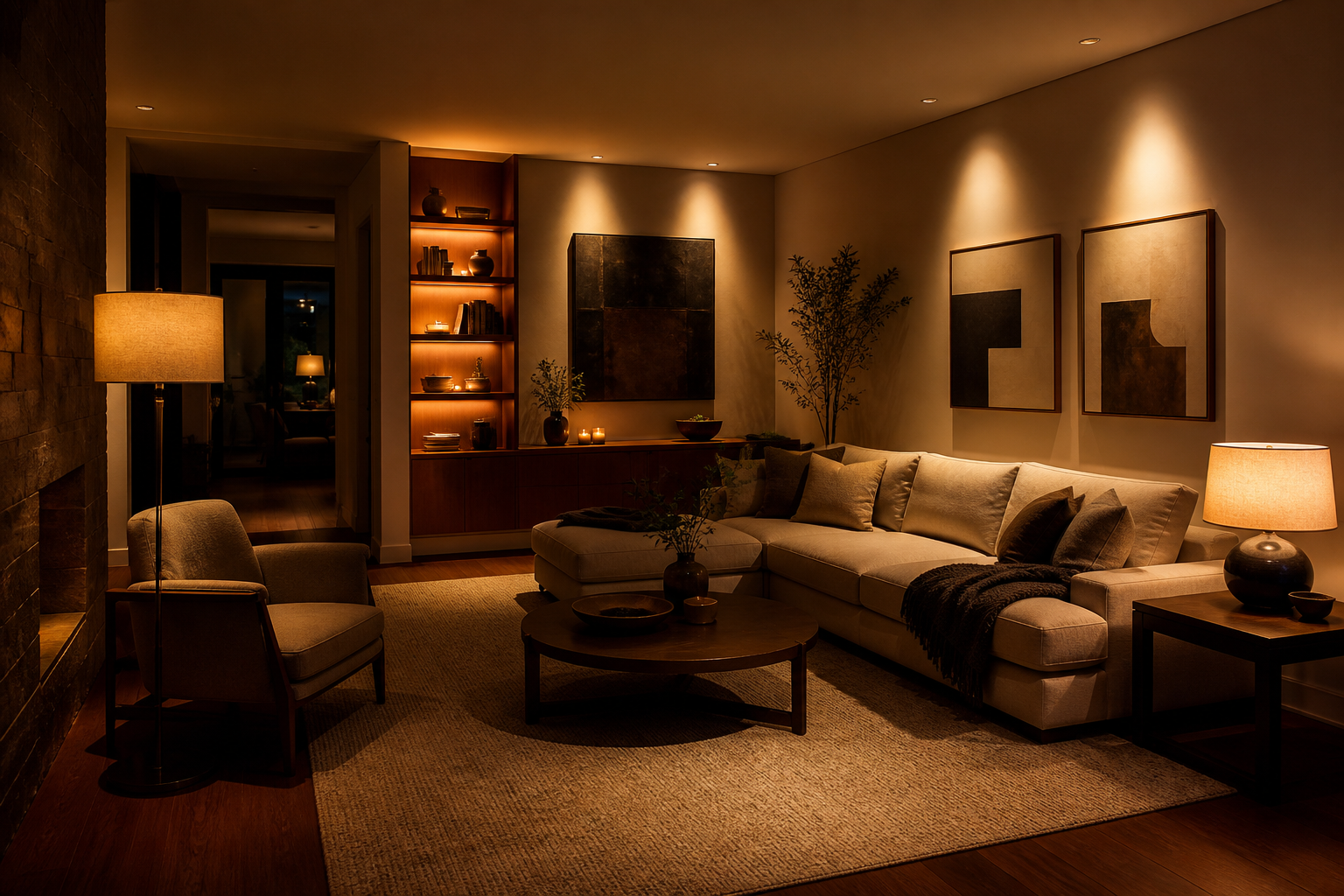
A practical approach to layered lighting
Good lighting is not one statement fixture. It is a measured mix of ambient, task, and accent light placed where the room needs it.
Read article →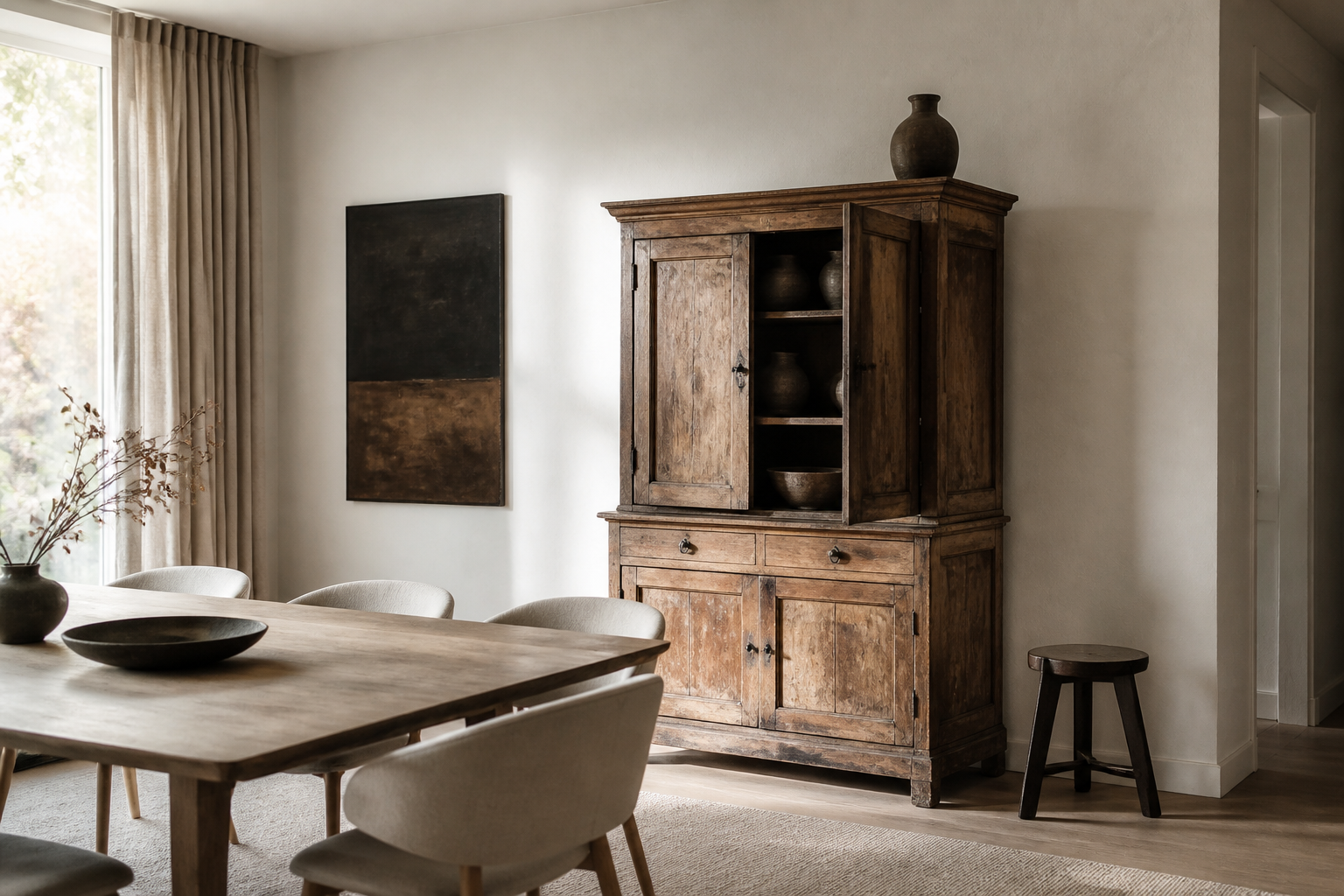
How one vintage piece can change the room
A single piece with age can break perfection, introduce memory, and give contemporary furniture something to respond to.
Read article →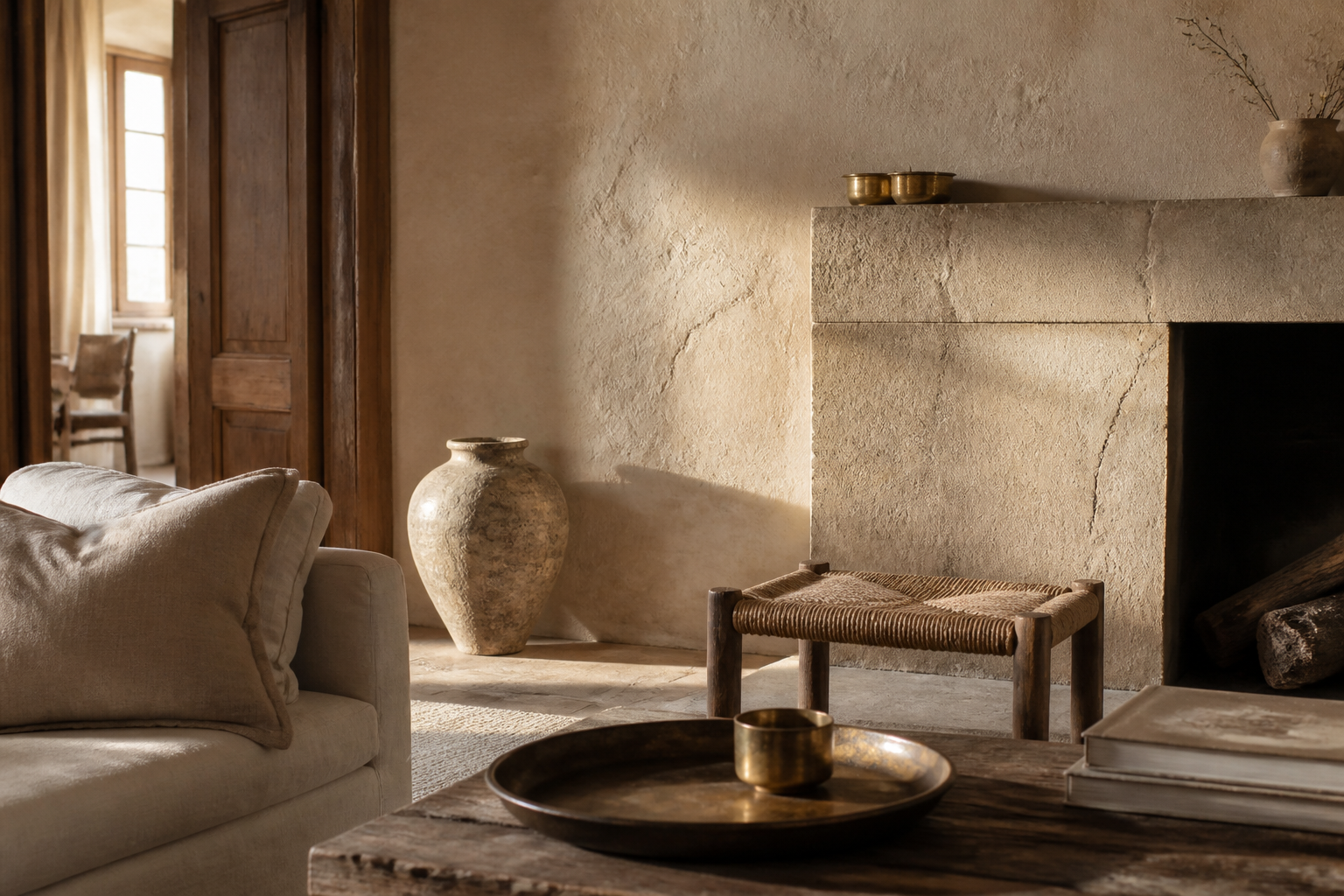
What makes a neutral room feel warm
Warmth comes from variation: rough beside smooth, matte beside reflective, old beside new. Color is only part of the equation.
Read article →