Materials
What makes a neutral room feel warm
16 JULY 2026 · 3 MIN READ
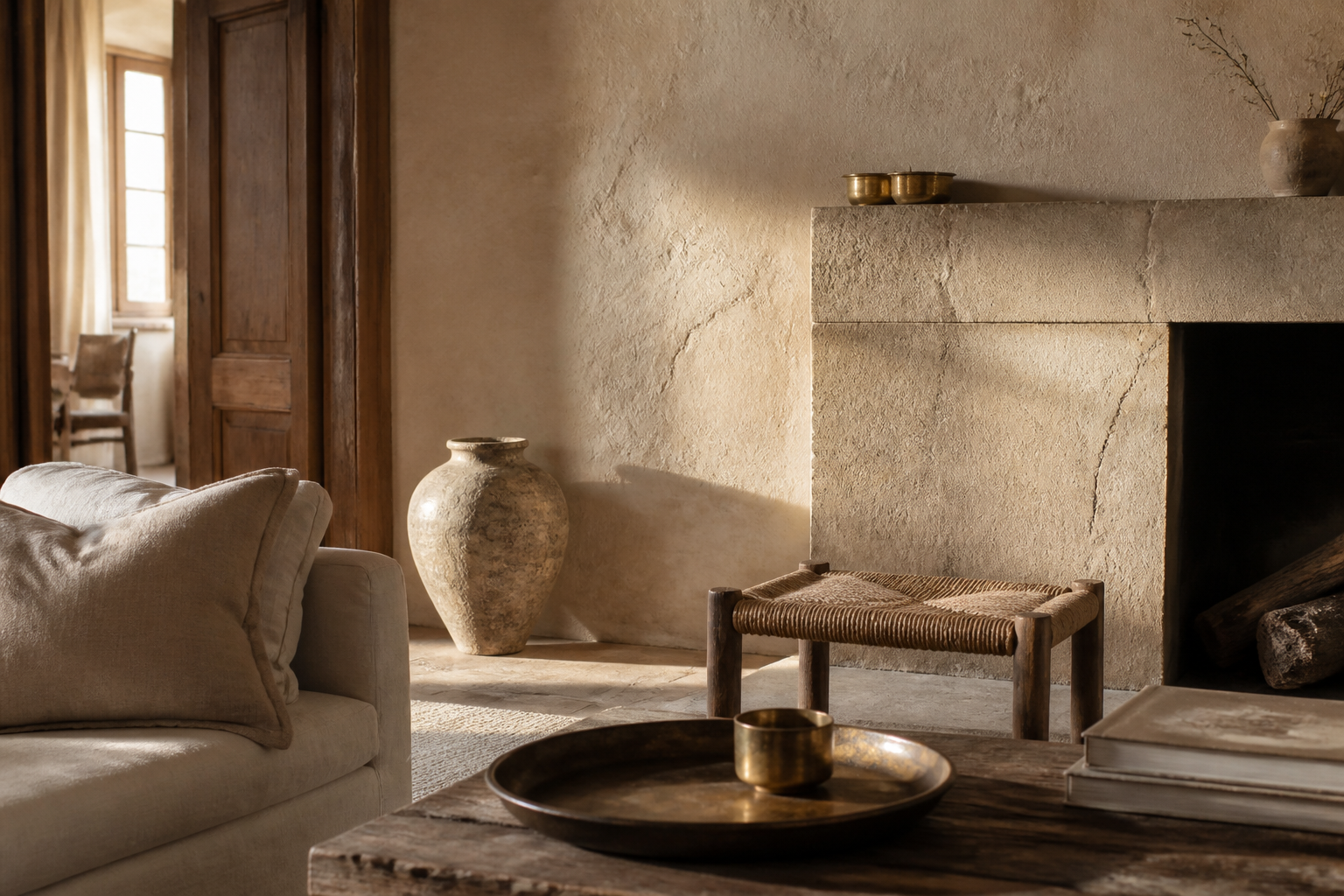
Warmth comes from variation: rough beside smooth, matte beside reflective, old beside new. Color is only part of the equation. A room can use cream, gray, and timber and still feel generous if the surfaces respond differently to light and touch.
Build several kinds of neutral
A successful neutral palette is rarely one repeated beige. Put a chalky plaster beside oatmeal linen and pale stone and the differences become visible. One reads dry, one soft, and one mineral. The colors may be close, but the room does not feel flat.
Test samples vertically and horizontally. A fabric at the window catches light differently from the same tone on a sofa. A stone floor looks cooler than a stone sample held in the hand.
Balance hard surfaces with things that move
Stone, plaster, glass, and timber give architecture definition. Curtains, rugs, upholstery, and blankets soften sound and change slightly as the room is used. That movement matters. It keeps a precise interior from feeling sealed.
Choose textiles for weave and weight before chasing an exact shade. A visible linen slub or dense wool pile often contributes more warmth than a stronger color would.
Add one darker anchor
Very pale rooms need enough contrast for the lighter surfaces to register. A smoked timber table, charcoal lamp, or dark frame can provide that anchor without turning the palette dramatic. The key is concentration: one grounded element is stronger than many scattered black accents.
Use age as another texture
Older timber, softened leather, and patinated metal contain variation that new finishes often lack. One piece with honest wear can interrupt the uniformity of newly specified materials. It also gives the eye a more detailed surface to return to.
Warmth is not the same as visual fullness. Leave clear wall and tabletop space around the richer textures so they can be noticed.
A neutral room feels warm when its surfaces create contrast at close range and calm at a distance.
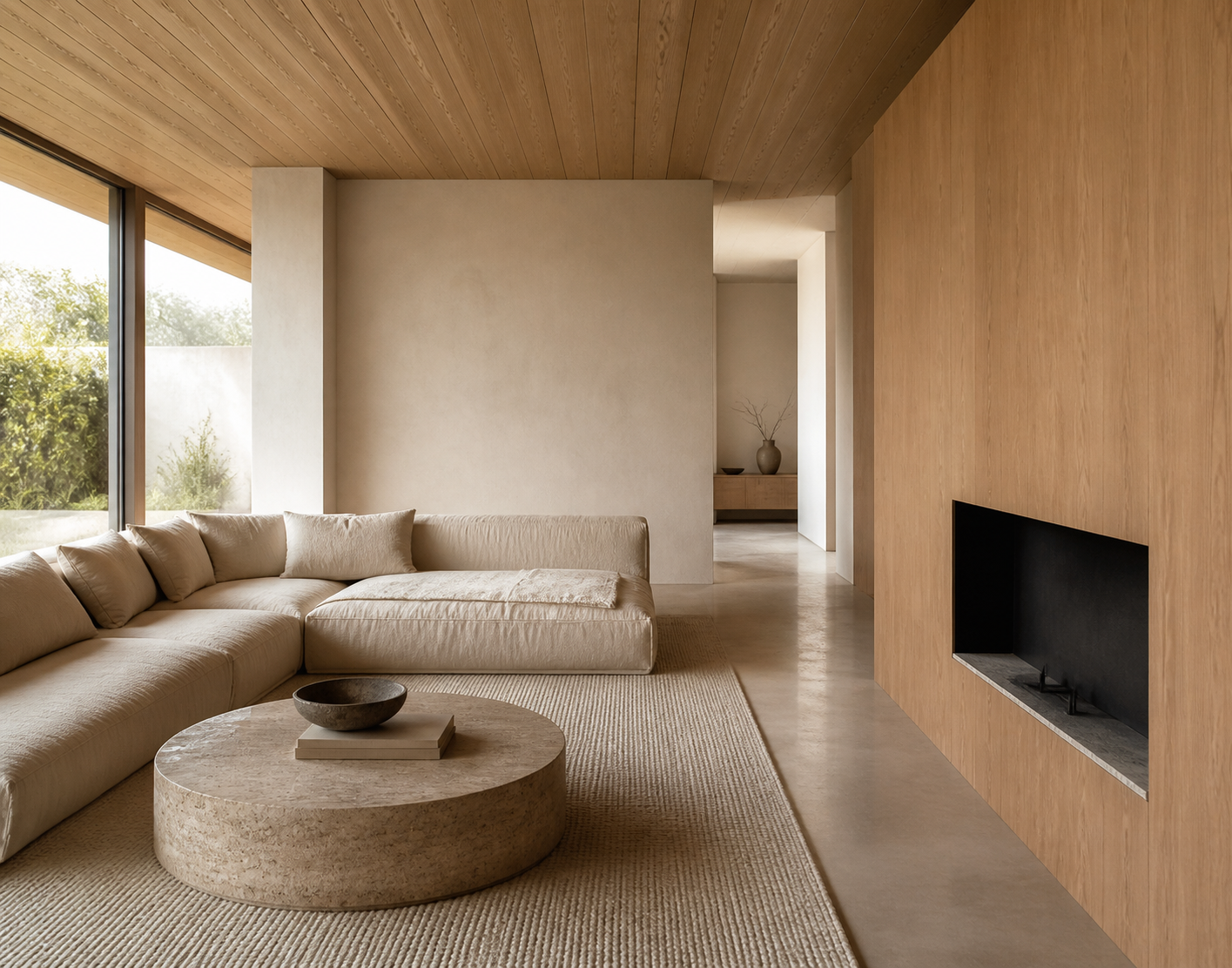
Why fewer materials can make a room feel richer
Limiting the palette does not limit expression. It gives proportion, texture, and light more room to do the work.
Read article →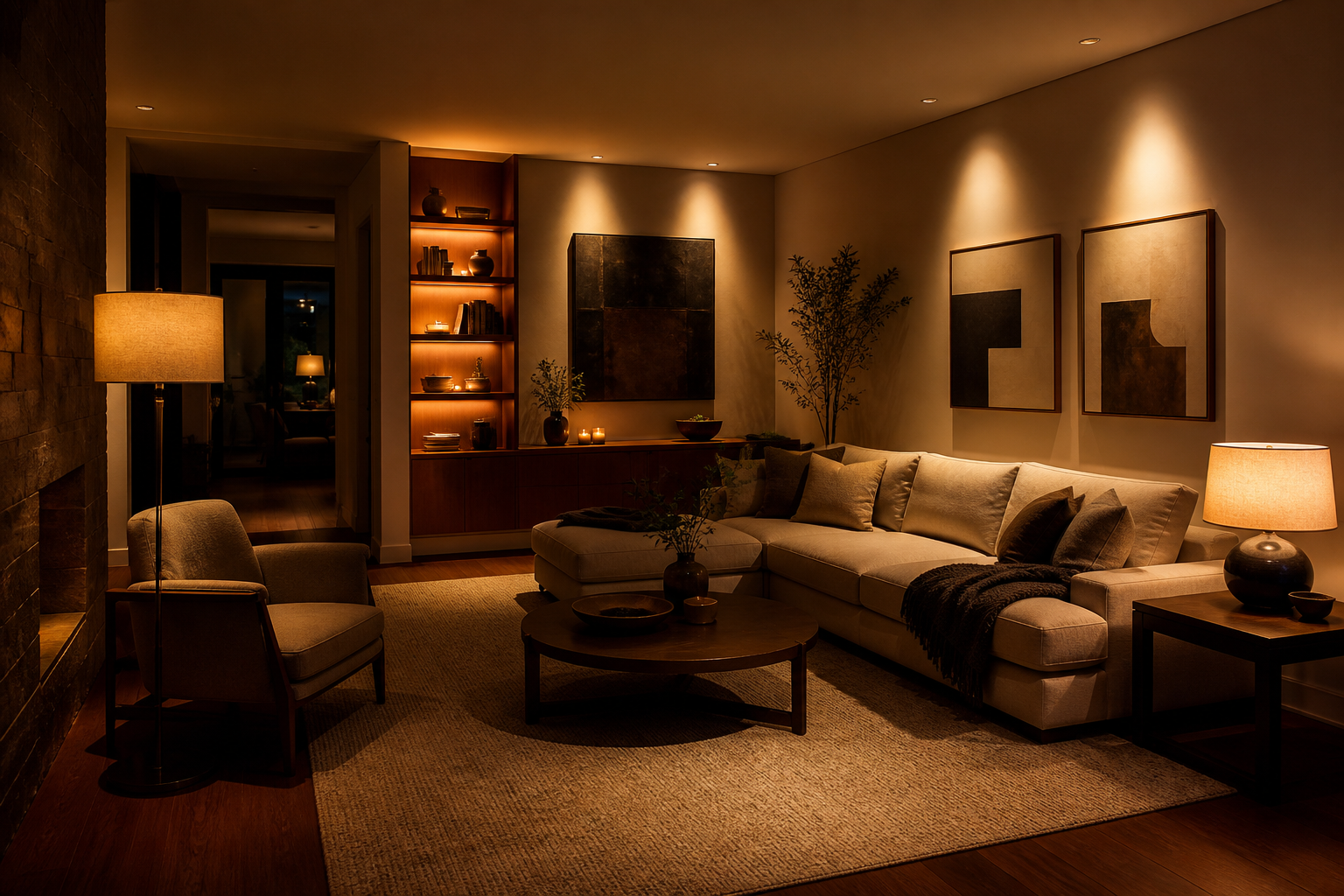
A practical approach to layered lighting
Good lighting is not one statement fixture. It is a measured mix of ambient, task, and accent light placed where the room needs it.
Read article →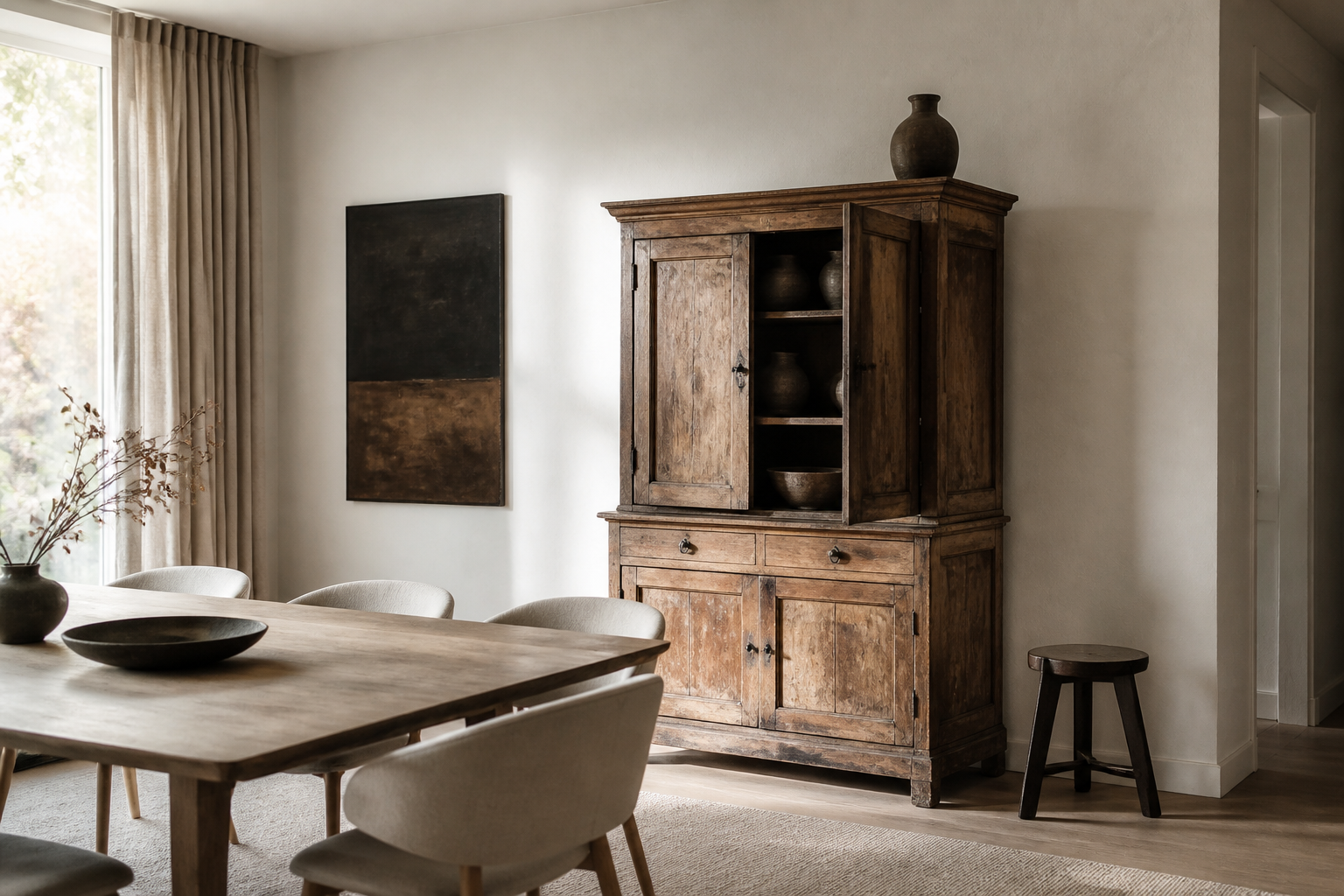
How one vintage piece can change the room
A single piece with age can break perfection, introduce memory, and give contemporary furniture something to respond to.
Read article →