Layout
Where to begin with a difficult floor plan
3 JULY 2026 · 3 MIN READ
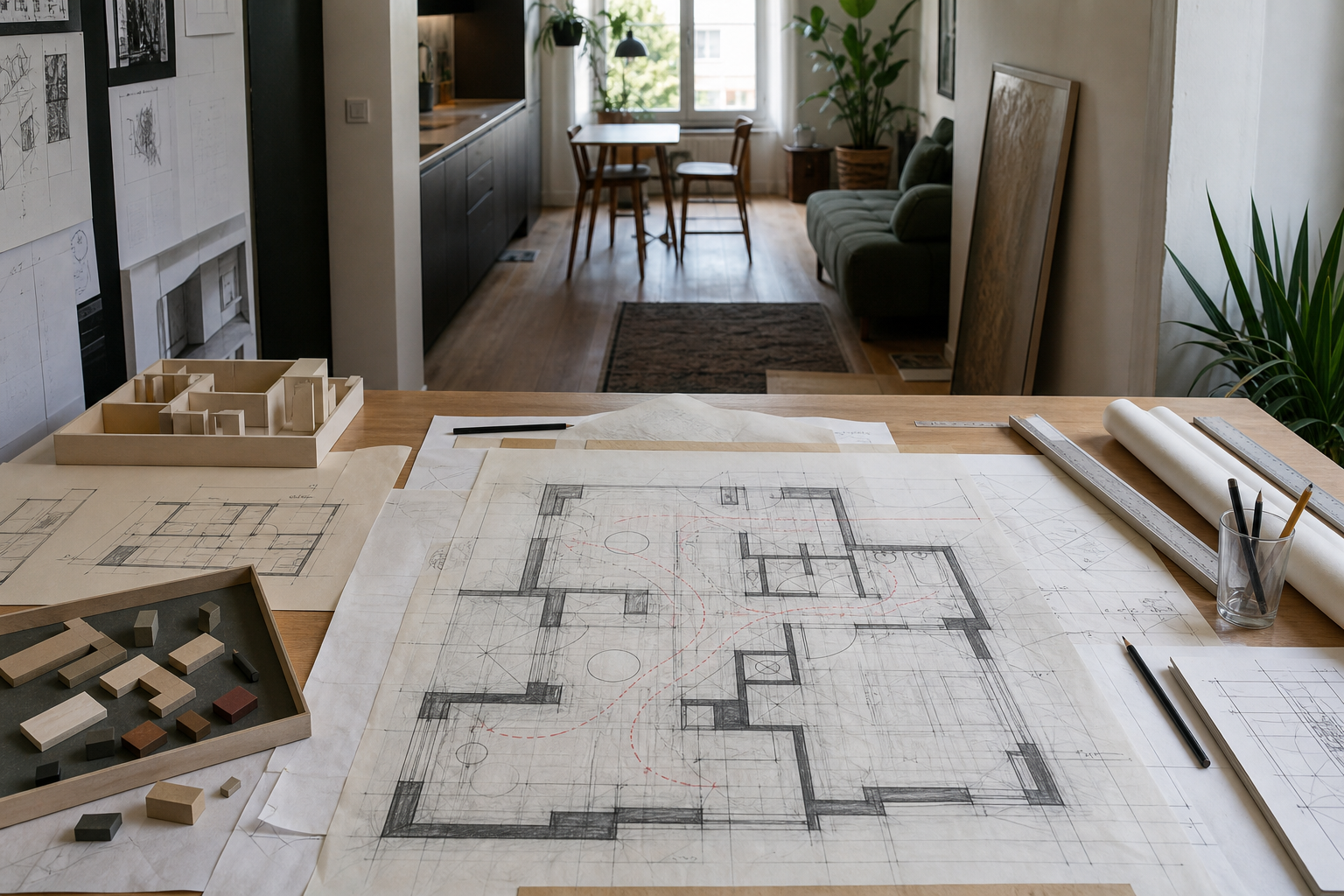
Before moving walls, trace the daily routes through the room. Most layout problems reveal themselves in circulation, storage, or competing focal points. A plan becomes easier to solve once the difficulty is named precisely.
Draw the routes, not the furniture
Begin with the paths people repeat: entry to kitchen, sofa to door, bed to wardrobe, table to garden. Mark where two routes cross and where an open door narrows the passage. These lines often explain why a room feels awkward before any furniture is placed.
Protect the most frequent route first. Occasional movement can accept a tighter turn; the path used twenty times a day should feel obvious.
Find the storage pressure
A layout may seem too small when the real issue is that storage is scattered. List what needs to live in the room and group it by use. Concentrating full-height storage along one less valuable wall can free the rest of the plan more effectively than adding several small cabinets.
Leave room for doors and drawers to operate. A storage plan that blocks circulation when open has only moved the problem.
Choose one primary orientation
Rooms become confused when the fireplace, television, window, and conversation area all demand separate furniture arrangements. Decide which orientation supports everyday use, then allow the others to play supporting roles. A chair can turn toward a view without forcing the whole room to follow it.
Test the plan at full scale
Dimensions on paper can be misleading. Use painter’s tape or movable boxes to mark the principal pieces and walk the routes between them. Check the distance behind dining chairs, the reach of cabinet doors, and the space needed to pass someone already seated.
Only after these tests should structural changes be considered. Removing a wall may create openness, but it can also remove storage, acoustic separation, and useful edges for furniture.
The strongest floor plan is not the one with the fewest walls. It is the one that makes everyday movement feel uncomplicated.
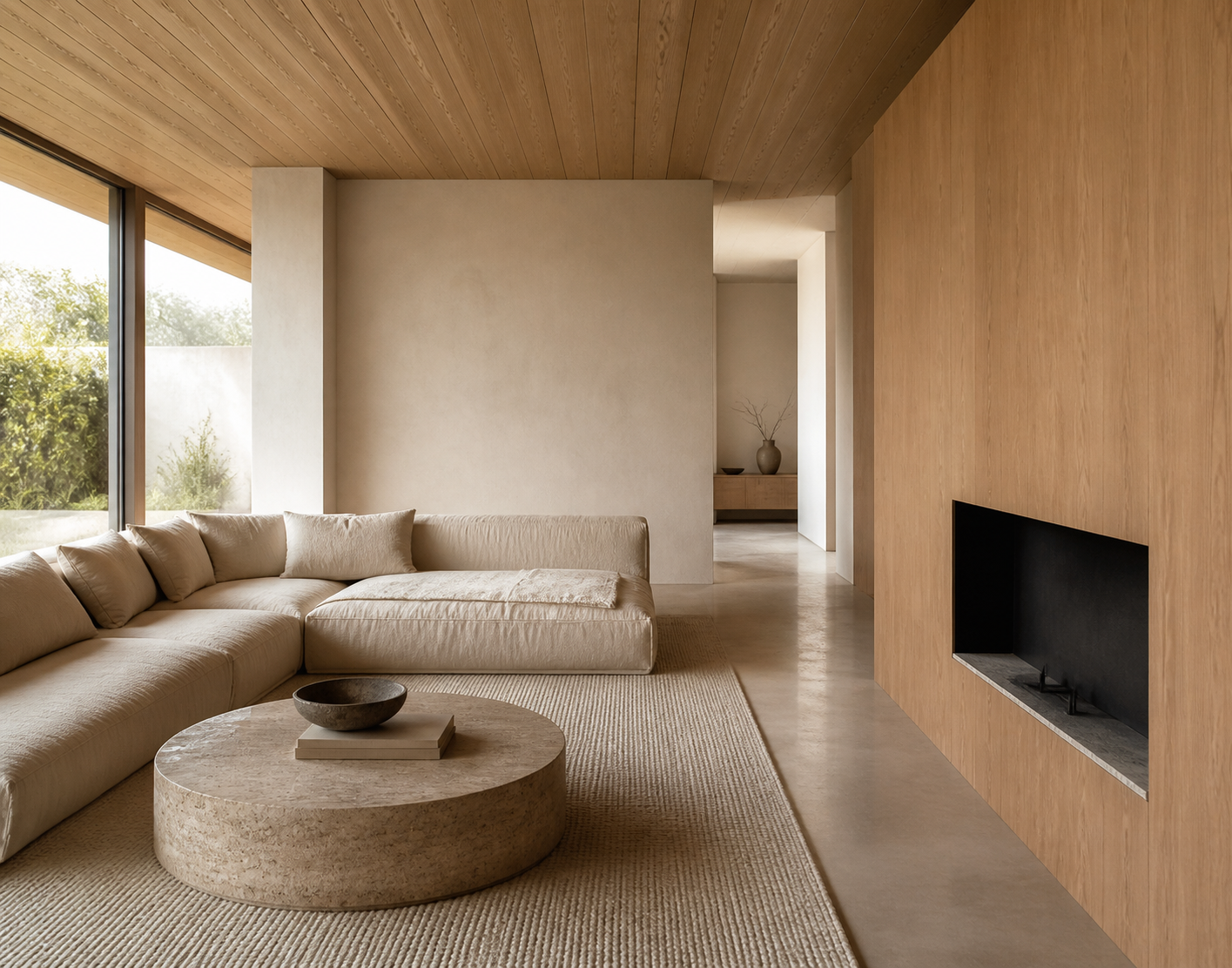
Why fewer materials can make a room feel richer
Limiting the palette does not limit expression. It gives proportion, texture, and light more room to do the work.
Read article →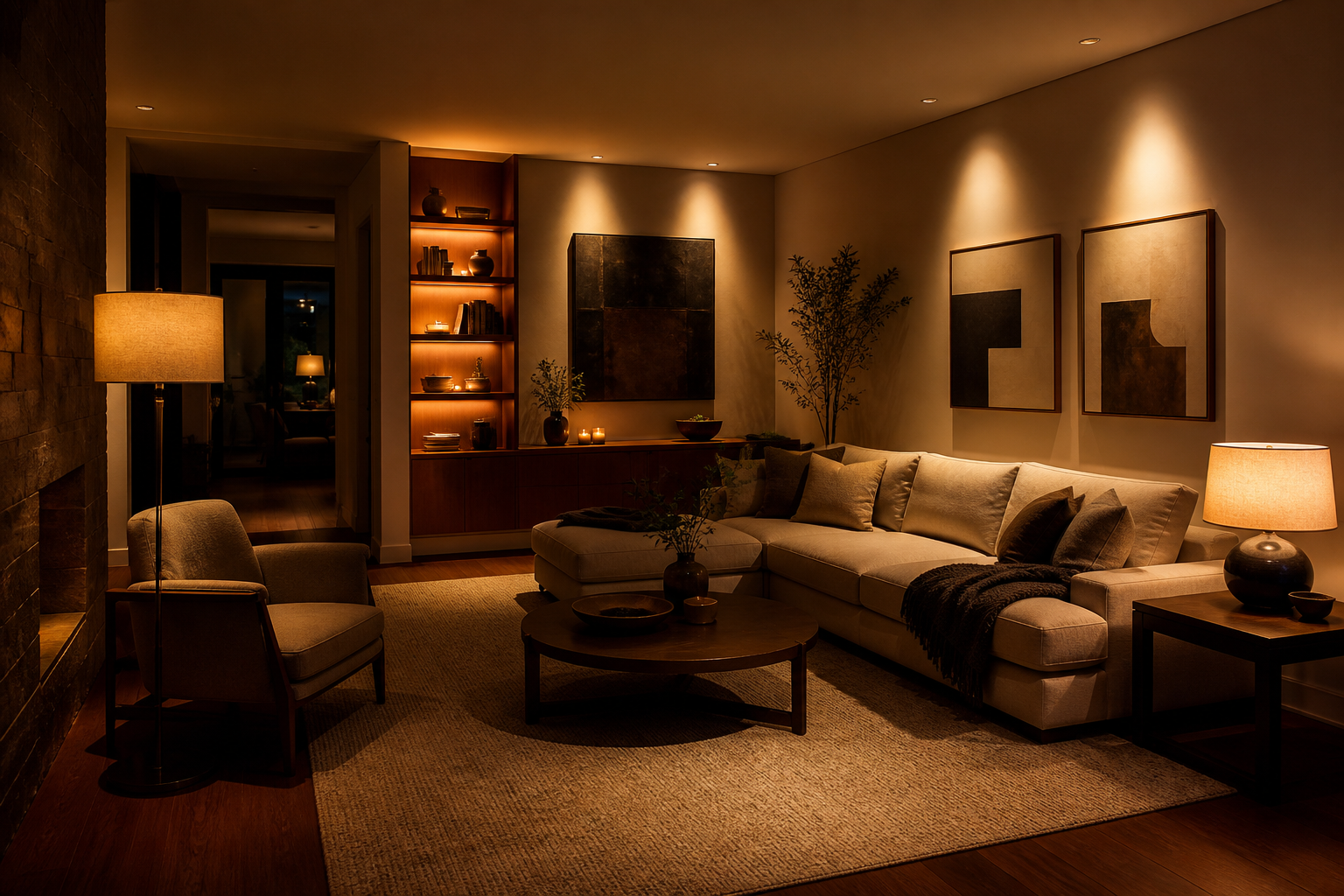
A practical approach to layered lighting
Good lighting is not one statement fixture. It is a measured mix of ambient, task, and accent light placed where the room needs it.
Read article →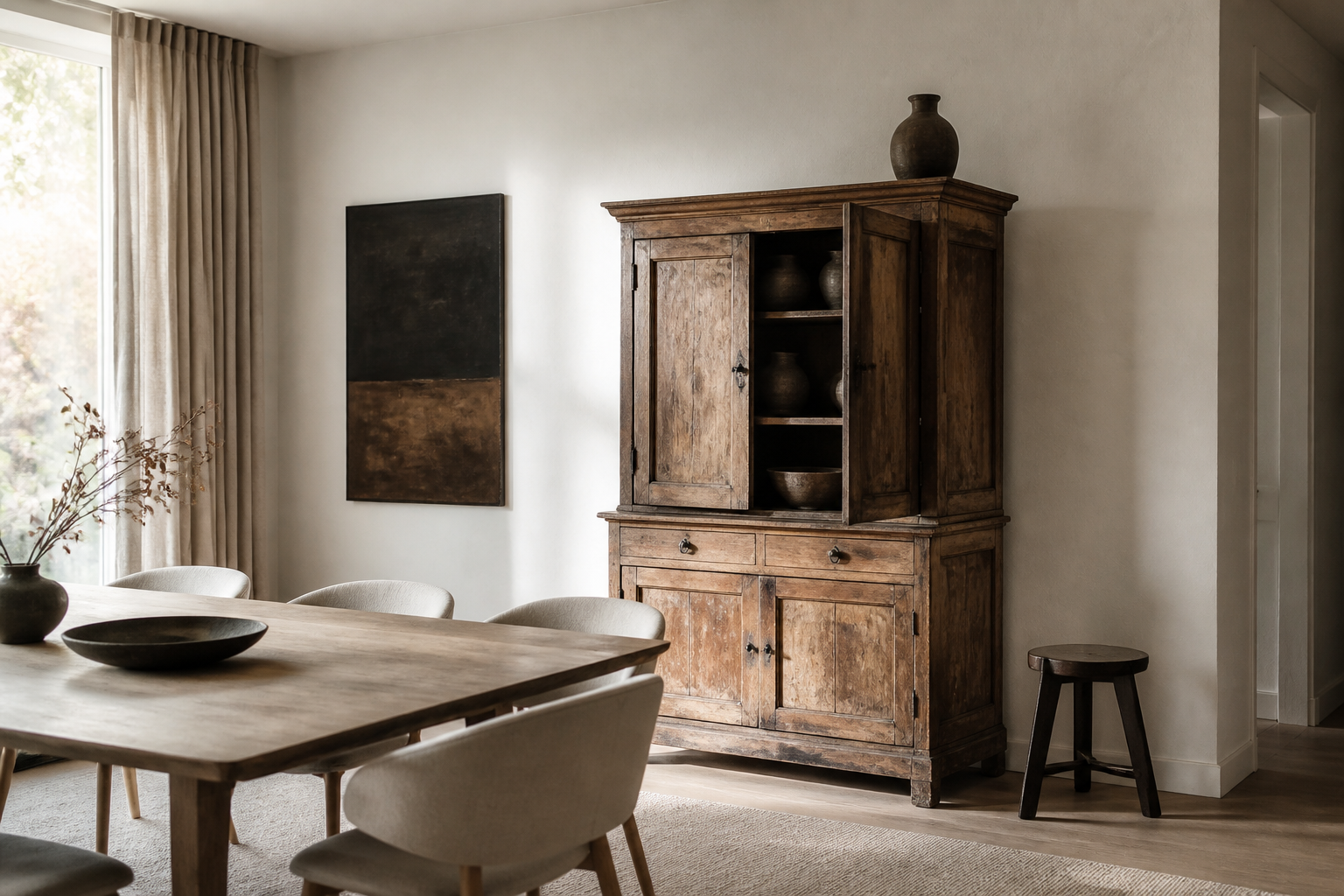
How one vintage piece can change the room
A single piece with age can break perfection, introduce memory, and give contemporary furniture something to respond to.
Read article →